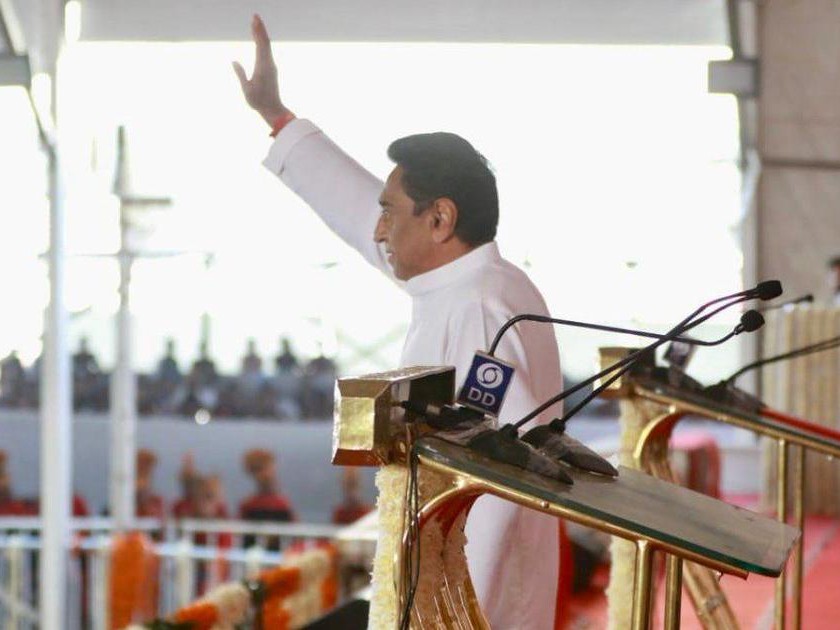
Kamal Nath
0
Consecutive Lok Sabha Wins
0
Years of Public Service
0
Union Cabinet Portfolios
0
Term as Chief Minister
0
Farmers Benefited by Loan Waiver
01
Parliamentary Legacy

A Record of Unmatched Electoral Dominance

Nine consecutive victories from Chhindwara make Kamal Nath one of the longest-serving Members of Parliament in Indian history, a feat that stands as a testament to the unwavering trust of his constituents.

Kamal Nath's parliamentary journey is nothing short of extraordinary. First elected to the Lok Sabha from Chhindwara in 1980, he went on to win the seat an unprecedented nine consecutive times -- in 1980, 1984, 1989, 1991, 1996, 1998, 1999, 2004, and 2014. This remarkable record places him among the elite handful of parliamentarians who have represented the same constituency for over four decades, a distinction that speaks volumes about the depth of connection between the leader and his people.

What makes this achievement particularly noteworthy is the political landscape of Chhindwara itself. Situated in Madhya Pradesh, a state that has been largely dominated by the Bharatiya Janata Party for extended periods, Chhindwara remained a bastion of support for Kamal Nath and the Indian National Congress. This ability to consistently win in what could be described as hostile political territory underscores his extraordinary personal appeal, his grassroots connect, and his relentless focus on constituency development.

Throughout his parliamentary career, Kamal Nath served on numerous standing committees and select committees, contributing to legislation across domains ranging from commerce and industry to foreign affairs. He was known for his incisive interventions in parliamentary debates, often bringing an international perspective shaped by his extensive global exposure. His understanding of trade policy, economic reform, and infrastructure development enriched the quality of legislative discourse in the House.

Key Parliamentary Contributions

  • Actively contributed to the formulation of India's trade and commerce policies through parliamentary committees and floor debates, shaping the nation's economic trajectory during critical periods of liberalization and globalization.
  • Served on multiple Parliamentary Standing Committees, including those on Commerce, External Affairs, and Finance, bringing his deep expertise to bear on complex legislative matters.
  • Championed the cause of tribal welfare and rural development in parliamentary proceedings, ensuring that the voice of marginalized communities in central India found expression at the highest levels of governance.
  • Played a pivotal role in debates surrounding Special Economic Zones, Foreign Direct Investment policy, and trade agreements, consistently advocating for frameworks that balanced economic growth with social equity.
  • Maintained an exemplary attendance record and was known for his detailed preparation and nuanced understanding of policy briefs, earning respect across party lines.
Kamal Nath - Achievements and Contributions
1980
First Electoral Victory
Won the Chhindwara Lok Sabha seat for the first time in 1980, beginning a historic streak that would span over four decades and nine consecutive terms in the lower house of Parliament.
2014
Ninth Consecutive Win
Achieved a ninth consecutive victory from Chhindwara even during the sweeping national mandate of 2014, demonstrating the unshakeable bond between the leader and his constituency.

Democracy is not merely about winning elections. It is about earning the trust of the people every single day, through actions that transform their lives and uphold their dignity.

-- Kamal Nath
02
Union Minister of Commerce & Industry (2004-2009)

Architect of India's Global Trade Ascent

As Union Minister of Commerce and Industry, Kamal Nath transformed India's position on the world trade stage, championing the interests of developing nations while propelling Indian exports to unprecedented heights.

The period from 2004 to 2009 marked a defining chapter in India's economic evolution, and at the helm of the nation's commerce and trade apparatus stood Kamal Nath. As Union Minister of Commerce and Industry under Prime Minister Manmohan Singh's government, he presided over one of the most dynamic periods of trade expansion in independent India's history. India's total foreign trade grew from approximately $195 billion in 2004-05 to over $500 billion by 2008-09, representing a growth of over 150% during his tenure -- a transformation that positioned India as a serious player in the global economic order.

Under his stewardship, India's merchandise exports surged, with the country becoming one of the fastest-growing exporters in the world. He launched several export promotion initiatives, streamlined trade facilitation procedures, and worked tirelessly to reduce the transaction costs that had long hampered Indian businesses seeking to compete on the global stage. The Focus Market Scheme, Focus Product Scheme, and other targeted interventions under the Foreign Trade Policy helped diversify India's export basket and expand its reach into new markets across Africa, Latin America, and Southeast Asia.

WTO Leadership
Led India's delegation at the WTO Cancun Ministerial Conference in 2003 and played a decisive role in the Doha Development Round. At Cancun, Kamal Nath emerged as the voice of the developing world, forging coalitions that challenged the inequitable trade frameworks pushed by wealthy nations. His firm stance on agricultural subsidies and market access ensured that the interests of over two billion people in the developing world were not sacrificed at the altar of free trade ideology.
FDI Policy Reforms
Spearheaded comprehensive Foreign Direct Investment reforms that opened up critical sectors of the Indian economy to international capital while maintaining strategic safeguards. Under his tenure, FDI inflows into India increased dramatically, rising from $6 billion in 2004-05 to over $35 billion by 2008-09. He navigated the complex political terrain of retail FDI, telecom liberalization, and infrastructure investment with pragmatic skill.
Special Economic Zones
Championed the Special Economic Zones (SEZ) policy as a catalyst for export-led industrialization. The SEZ Act of 2005, crafted under his guidance, created dedicated export hubs that attracted billions in investment, generated millions of jobs, and positioned India as a manufacturing and services destination. Despite political controversy, the SEZ framework fundamentally reshaped India's approach to export promotion and industrial clustering.

Champion of Developing Nations

Perhaps Kamal Nath's most enduring legacy from his tenure as Commerce Minister is the role he played as a champion of the developing world on the global trade stage. At the WTO, he was instrumental in forming the G-20 coalition of developing countries -- not to be confused with the G-20 heads of state forum -- that fundamentally altered the dynamics of multilateral trade negotiations. This coalition, which included nations like Brazil, China, South Africa, and Argentina, stood firm against the agricultural protectionism of the United States and European Union, demanding that any trade agreement genuinely serve the interests of the world's poorest farmers.

His negotiating acumen earned him international recognition. Newspapers and trade journals across the world profiled him as one of the most formidable trade negotiators of his generation. Pascal Lamy, the Director-General of the WTO, acknowledged his critical role in shaping the Doha Round discussions. The New York Times, Financial Times, and The Economist all noted his ability to build consensus among disparate developing nations while holding firm on core principles of equity and fairness.

India's Century -- A Vision for the Future

During this period, Kamal Nath also authored the widely acclaimed book "India's Century: The Age of Entrepreneurship in the World's Biggest Democracy", published internationally. The book presented a compelling vision of India's economic potential, arguing that the 21st century would be defined by India's rise as a global economic powerhouse. Drawing on his extensive experience in government, trade negotiations, and interactions with global business leaders, the book articulated a roadmap for India to harness its demographic dividend, entrepreneurial energy, and democratic resilience to achieve sustained and inclusive growth. It was translated into multiple languages and received critical acclaim from economists, policymakers, and business leaders worldwide.

Trade Growth Under His Tenure
0
Total Foreign Trade by 2008-09
0
Growth in Trade Volume
0
FDI Inflows by 2008-09

The developing world cannot be expected to open its markets while the developed world keeps its own markets shut. Trade must be fair before it can be free.

-- Kamal Nath, at WTO Cancun 2003
03
Union Minister of Urban Development (2009-2011)

Reshaping India's Urban Landscape

As Union Minister of Urban Development, Kamal Nath accelerated India's urban transformation through infrastructure modernization, metro rail expansion, and visionary housing initiatives.

JNNURM Implementation
Accelerated the Jawaharlal Nehru National Urban Renewal Mission (JNNURM), India's largest urban reform initiative. Under his leadership, the disbursement and implementation of JNNURM projects gained significant momentum, with hundreds of cities receiving funding for water supply, sewerage, drainage, solid waste management, and urban transport. He pushed for mandatory governance reforms as a condition for funding, embedding transparency and accountability into urban governance frameworks across the nation.
Metro Rail Expansion
Championed the expansion of metro rail systems across multiple Indian cities. Under his stewardship, new metro projects were sanctioned and accelerated in cities including Mumbai, Chennai, Bangalore, Kolkata, Jaipur, and Hyderabad. He recognized that modern mass rapid transit was essential for India's burgeoning cities and worked to fast-track approvals, secure funding, and coordinate between central and state agencies to ensure timely execution.
Rajiv Awas Yojana
Launched the Rajiv Awas Yojana (RAY), an ambitious urban housing scheme aimed at creating a slum-free India. This initiative laid the foundational framework that would later evolve into the Pradhan Mantri Awas Yojana. Under RAY, comprehensive slum rehabilitation and affordable housing programs were conceptualized, with pilot projects launched across multiple states. The scheme integrated land tenure security, in-situ redevelopment, and credit-linked subsidies to address urban India's massive housing deficit.

When Kamal Nath took charge of the Ministry of Urban Development in 2009, India's cities were at a crossroads. Rapid urbanization was straining infrastructure to breaking point, while governance frameworks remained rooted in an era of slow, incremental growth. He brought to the ministry the same dynamism and results-oriented approach that had characterized his tenure at Commerce, recognizing that India's economic future would be determined in its cities.

His vision for urban India was comprehensive and forward-looking. He pushed for the adoption of smart city principles years before the concept became a formal government program. He advocated for technology-driven urban management, integrated land-use planning, and sustainable development practices that balanced economic growth with environmental responsibility. His emphasis on public transport over private vehicles, green building standards, and walkable urban design reflected a sophistication in urban policy thinking that was ahead of its time.

Under his leadership, the ministry also undertook significant reforms in urban governance. He pushed for the empowerment of urban local bodies, arguing that India's cities needed stronger, more autonomous, and more accountable municipal governments. He championed the use of Geographic Information Systems (GIS) for urban planning, e-governance platforms for citizen services, and performance-based funding mechanisms that rewarded cities for implementing reforms.

Infrastructure Modernization

Kamal Nath recognized that India's urban infrastructure needed a quantum leap, not incremental improvements. He pushed for world-class standards in road construction, water supply systems, and sewage treatment within Indian cities. His insistence on time-bound project completion and regular monitoring resulted in a measurable acceleration in the pace of urban infrastructure delivery. He also initiated discussions on Public-Private Partnership models for urban infrastructure, recognizing that government resources alone would be insufficient to meet the staggering investment needs of India's growing cities.

The legacy of his tenure at Urban Development extends beyond specific projects. He fundamentally shifted the discourse around urban governance in India, making it a priority in policy conversations and establishing frameworks that subsequent governments built upon. His early advocacy for smart, sustainable, and inclusive urban development laid the intellectual groundwork for many of the urban programs that followed.

04
Chief Minister of Madhya Pradesh (2018-2020)

Governance with Compassion & Vision

In his tenure as Chief Minister, Kamal Nath implemented transformative welfare schemes, revitalized the economy, and brought a new era of inclusive governance to Madhya Pradesh.

The 2018 Madhya Pradesh Assembly elections marked a watershed moment in the state's political history. After fifteen years of BJP rule, the people of Madhya Pradesh placed their trust in the Indian National Congress under the leadership of Kamal Nath, who was sworn in as the Chief Minister on December 17, 2018. Despite the brevity of his tenure -- curtailed by political developments in March 2020 -- the impact of his governance was profound and far-reaching, particularly for the state's farming communities, unorganized workers, and economically disadvantaged populations.

Jai Kisan Fasal Rin Maafi Yojana
Within hours of taking office, Kamal Nath fulfilled the Congress party's most prominent electoral promise -- the waiver of farm loans. The Jai Kisan Fasal Rin Maafi Yojana provided relief to over 12 lakh farmers by waiving loans up to Rs 2 lakh. This massive fiscal intervention, totaling thousands of crores, provided immediate relief to farming families crushed under the weight of agricultural debt, restoring their dignity and offering a fresh start.
Sambal Yojana
Launched the landmark Mukhyamantri Jan Kalyan (Sambal) Yojana, a comprehensive social security scheme for unorganized sector workers. The scheme provided life and accident insurance, education incentives for children, electricity bill subsidies, funeral assistance, and improved access to healthcare for workers in the unorganized sector -- a population that constitutes the vast majority of India's labor force yet had traditionally been excluded from formal welfare frameworks.
Electricity Bill Relief
Implemented a significant electricity bill relief program for economically weaker households. Under this initiative, families consuming up to 100 units per month received subsidized electricity at drastically reduced rates, while the poorest households received electricity virtually free. This intervention directly impacted millions of families across Madhya Pradesh, reducing the financial burden on those least equipped to bear it.

Economic Development & Investment

Understanding that sustainable welfare requires a strong economic foundation, Kamal Nath moved swiftly to position Madhya Pradesh as an investment destination. He organized the Magnificent Madhya Pradesh investor summit, which attracted commitments of investment worth thousands of crores from domestic and international corporations. His experience as a former Commerce Minister gave him unique credibility with the business community, and he personally engaged with major industrialists to bring investment to the state.

He launched initiatives to promote food processing, pharmaceuticals, textiles, and IT in the state, leveraging Madhya Pradesh's agricultural abundance and strategic central location. Streamlined approval processes, single-window clearance systems, and sector-specific incentive packages were introduced to create a business-friendly environment. His vision was to transform Madhya Pradesh from an agrarian state into a diversified economy with robust industrial and services sectors.

Infrastructure Transformation

Despite the limited time available, Kamal Nath initiated several significant infrastructure projects in Madhya Pradesh. Road construction and upgradation programs were launched across the state, with particular emphasis on connecting tribal and rural areas to major economic centers. He pushed for the expansion of the state highway network, improvement of urban roads in major cities, and the construction of bridges and flyovers to ease congestion in growing urban centers.

He also prioritized healthcare infrastructure, initiating the upgradation of district hospitals and primary health centers. Recognizing the critical shortage of medical facilities in rural Madhya Pradesh, he launched programs to establish new health centers in underserved areas and recruit medical professionals through attractive incentive packages.

Social Welfare Initiatives
  • Yuva Swabhiman Yojana -- Employment and skill training for urban youth from economically weaker sections, providing 100 days of employment annually.
  • Rs 4,000 per Quintal MSP -- Ensured better Minimum Support Prices for wheat and other key agricultural produce, putting more money directly in the hands of farmers.
  • Indira Grah Jyoti Yojana -- Subsidized electricity for households with monthly consumption up to 150 units, providing relief to middle-class and lower-income families.
  • Anti-Corruption Drive -- Launched a vigorous anti-corruption campaign, with action taken against corrupt officials and a commitment to transparent governance.
  • Women's Empowerment -- Initiated programs for women's safety, financial inclusion, and political participation at the grassroots level.

A government's true measure is not in the statistics it produces, but in the tears it wipes and the hopes it kindles in the hearts of the most vulnerable.

-- Kamal Nath
05
The Chhindwara Transformation

From Backward District to Model Constituency

The transformation of Chhindwara from one of India's most underdeveloped tribal districts into a model of modern development stands as perhaps the most tangible and enduring legacy of Kamal Nath's five decades in public life.

When Kamal Nath first contested from Chhindwara in 1980, the district was classified among the most backward in India. A predominantly tribal region in the heart of central India, it suffered from abysmal road connectivity, virtually no industrial base, limited educational infrastructure, inadequate healthcare facilities, and chronic economic underdevelopment. The transformation that unfolded over the subsequent four decades is a story of sustained vision, relentless effort, and the power of committed political leadership to reshape the trajectory of an entire region.

Roads
Road Infrastructure
Connecting Every Corner
Under Kamal Nath's sustained advocacy, Chhindwara witnessed a complete overhaul of its road network. From a district where even the main town was poorly connected to the state highway system, Chhindwara today boasts a comprehensive network of national highways, state highways, and rural roads that connect even the most remote tribal hamlets to markets and urban centers. The construction of all-weather roads to tribal villages, which were previously cut off during monsoons, fundamentally changed the economic calculus for hundreds of thousands of rural residents. The Chhindwara-Nagpur highway and connections to Jabalpur and Bhopal were upgraded to modern standards, dramatically reducing travel times and opening up economic opportunities.
Edu
Education
Building Knowledge Infrastructure
Kamal Nath championed the establishment of numerous educational institutions in Chhindwara. Engineering colleges, medical colleges, polytechnics, ITIs (Industrial Training Institutes), and degree colleges were established across the district, providing opportunities for higher education that previously required young people to migrate to distant cities. The establishment of the Government Engineering College and Government Medical College in Chhindwara were landmark achievements that transformed the district into an educational hub for the entire region. Hundreds of primary and secondary schools were constructed or upgraded, with particular attention to tribal areas where educational access had been historically abysmal. Residential schools for tribal students, scholarships, and mid-day meal programs were expanded to improve enrollment and retention rates.
Health
Healthcare
Bringing Health to the Hinterland
The healthcare transformation in Chhindwara has been equally dramatic. From a district where residents had to travel to Nagpur or Bhopal for even moderately complex medical procedures, Chhindwara now boasts a district hospital with modern facilities, multiple community health centers, and a network of primary health centers reaching deep into rural areas. The district medical college has not only improved healthcare delivery but also created a pipeline of trained medical professionals who serve the local population. Mobile health units, telemedicine connectivity, and specialized outreach camps for maternal and child health have significantly improved health outcomes in the district's tribal areas.
Tech
Industry & Technology
Economic Diversification
Perhaps the most remarkable aspect of Chhindwara's transformation is the establishment of industrial and technology infrastructure in what was once a purely agrarian economy. Kamal Nath facilitated the creation of industrial areas and IT parks in the district, attracting investment from both domestic and international companies. The Chhindwara IT Park, modeled on the successful IT hubs of larger cities, has attracted technology companies and created employment opportunities for educated local youth. Industrial estates for food processing, manufacturing, and small-scale industries have diversified the local economy and reduced dependence on agriculture. The establishment of cold storage facilities, warehousing infrastructure, and market yards has also strengthened the agricultural value chain, ensuring that farmers receive better prices for their produce.
Agri
Agriculture
Modernizing Farming
Agricultural modernization has been a cornerstone of Chhindwara's transformation. Irrigation projects, including the construction of check dams, bore wells, and canal networks, have significantly expanded the irrigated area in the district, reducing dependence on rain-fed agriculture. The introduction of orange cultivation has been a particularly successful initiative, with Chhindwara oranges now being recognized as a premium product. Modern agricultural practices, improved seed varieties, organic farming initiatives, and the establishment of agricultural research facilities have helped increase productivity and farmer incomes. The construction of mandis (agricultural markets) with modern facilities has improved price discovery and reduced exploitation by middlemen.
0
km of Roads Built
0
Schools Established
0
Health Centers Built
0
Industrial & IT Parks
06
Global Statesmanship

India's Voice on the World Stage

Kamal Nath's contributions to global trade diplomacy and economic policy have earned him recognition as one of the most formidable and respected statesmen in international economic affairs.

Beyond the borders of India, Kamal Nath is recognized as a statesman of considerable international standing. His role in WTO negotiations during the Cancun and Hong Kong Ministerial Conferences established him as a formidable trade diplomat who could hold his own against the most experienced negotiators from the United States, European Union, and Japan. International media, including The New York Times, Financial Times, The Economist, and Bloomberg, have profiled him extensively as a key architect of the developing world's trade strategy.

His participation in G-20 trade discussions, bilateral trade negotiations with major economies, and engagement with multilateral institutions like the World Bank and International Monetary Fund further enhanced India's standing in the global economic order. He was a regular fixture at the World Economic Forum in Davos, where he articulated India's economic vision to global business and political leaders. His ability to engage with equal fluency on subjects ranging from agricultural subsidies to intellectual property rights to services trade liberalization made him a uniquely versatile trade diplomat.

Author and Thought Leader

Kamal Nath's intellectual contributions to economic policy discourse have been significant. His book "India's Century" was widely reviewed and discussed in academic and policy circles worldwide. He has been a prolific contributor to international forums, conferences, and publications, sharing his perspectives on trade, development, globalization, and India's role in the emerging world order. His speeches at institutions like the Brookings Institution, Council on Foreign Relations, and London School of Economics have been well received, reflecting a depth of analysis and breadth of vision that transcends partisan politics.

International trade bodies, academic institutions, and policy think tanks have regularly invited him to share his insights on South-South cooperation, trade and development, and the future of multilateral trade governance. His advocacy for a more equitable global trade system that genuinely serves the interests of the world's poorest nations continues to resonate in policy discussions around the world.

WTO Cancun 2003
Led the G-20 coalition of developing nations that challenged the inequitable trade proposals of wealthy nations, fundamentally altering the dynamics of multilateral trade negotiations and earning international recognition as a champion of the developing world.
"India's Century" Published
Authored the acclaimed book on India's economic potential, presenting a compelling vision of the nation's rise as a global economic power. Translated into multiple languages and reviewed by leading international publications including The Economist and Financial Times.
World Economic Forum
Regular participant and speaker at the Davos World Economic Forum, engaging with global leaders on India's economic vision, trade policy, and the future of the developing world in an increasingly interconnected global economy.
Global Speaking Engagements
Invited speaker at Brookings Institution, Council on Foreign Relations, London School of Economics, and numerous international trade conferences, sharing insights on development, globalization, and equitable trade systems.
07
Recognition & Honors

Awards & Acknowledgements

While the true measure of a public servant's legacy lies in the lives transformed and communities uplifted, formal recognitions serve as markers of the impact made on the national and international stage.

Outstanding Parliamentarian
Recognized as one of the most effective and consistent parliamentarians in Indian democratic history, with nine consecutive Lok Sabha victories and significant contributions to legislative discourse across multiple domains.
International Trade Leadership
Acknowledged by global trade bodies, international media, and fellow trade ministers as one of the most accomplished and formidable trade negotiators of the early 21st century, particularly for his leadership of the developing world's trade coalition.
Champion of Tribal Development
Widely recognized for the transformation of Chhindwara from one of India's most backward tribal districts into a model constituency, demonstrating that committed political leadership can overcome structural disadvantages and deliver comprehensive development.
Acclaimed Author
Author of "India's Century: The Age of Entrepreneurship in the World's Biggest Democracy," a widely acclaimed work that was translated into multiple languages and established him as an influential voice in global economic policy discourse.
Farmers' Champion
Honored by farming communities and agricultural organizations for the historic Jai Kisan Fasal Rin Maafi Yojana and consistent advocacy for farmer welfare, fair agricultural pricing, and rural infrastructure development throughout his career.
Urban Development Visionary
Recognized for his pioneering work in urban development policy, including the acceleration of JNNURM, metro rail expansion across multiple cities, and the conceptualization of affordable housing frameworks that shaped India's urban policy trajectory.

The best governance is that which reaches the last person in the last row. Everything else is merely administration.

-- Kamal Nath